


Table of Contents
- Understanding Asbestos Abatement Certification in Ontario
- Ontario Regulation 278/05 and Legal Framework
- Ontario Asbestos Training Requirements by Role
- Classifying Work Types: Type 1, Type 2, and Type 3 Operations
- Ontario Asbestos Work Procedures and Safe Practices
- Verifying Training Provider Approval and Certificate Validity
- Employer Compliance Checklist and Documentation
- Verifying Training Provider Approval and Certificate Validity
- Frequently Asked Questions
Last Updated: October 14, 2026
Understanding Asbestos Abatement Certification in Ontario
Asbestos abatement certification requirements in Ontario are mandated under provincial occupational health and safety legislation to protect workers and the public from exposure to this hazardous material.
The certification landscape in Ontario is built on a tiered system. Different work types require different levels of training and certification. A homeowner discovering asbestos in a 1970s kitchen renovation faces different compliance obligations than a contractor performing full structural deconstruction.
The confusion typically stems from the fact that Ontario’s framework distinguishes between awareness training, worker training, and supervisor training, each with distinct purposes and durations. This guide breaks down the actual requirements, the work classifications that trigger them, and the practical steps to verify compliance.
Ontario Regulation 278/05 and Legal Framework
Ontario Regulation 278/05 under the Occupational Health and Safety Act establishes the mandatory standards for asbestos work. This regulation defines what constitutes asbestos work, who must be trained, and what level of training is required based on the type of operation being performed.
The regulation applies whenever asbestos-containing materials are encountered or deliberately disturbed. It covers construction work, renovation, demolition, maintenance activities, and any operation where workers might be exposed to asbestos fibers. The framework is prescriptive: it names specific training providers and approval bodies, sets minimum course durations, and requires documented proof of completion.
The core principle underlying Ontario Regulation 278/05 is that training must be completed BEFORE work begins. This is not a checkbox you complete after the fact. Employers who allow uncertified workers to perform asbestos work face significant penalties, work stoppages, and liability exposure.
Ontario Asbestos Training Requirements by Role
Asbestos Awareness Training
Asbestos awareness training is the foundational level and is required for workers who may encounter asbestos-containing materials but are not performing removal or disturbance work. This training covers the health hazards of asbestos, how to recognize asbestos-containing materials in common building products, and what to do if asbestos is suspected on a worksite.
Awareness training typically runs 2-4 hours and focuses on recognition and reporting rather than hands-on procedures. It’s mandatory for general construction workers, maintenance staff, and anyone who might inadvertently disturb asbestos during routine work.
Many employers require awareness training for all site personnel, even those not directly involved in asbestos work, to create a culture of hazard recognition. This is a practical compliance strategy because it ensures that if asbestos is unexpectedly discovered, the team knows not to disturb it further.
Asbestos Abatement Worker Training Ontario
Asbestos abatement worker training is required for individuals who will perform the actual removal, encapsulation, or disturbance of asbestos-containing materials. This is a hands-on, technical course that covers safe work procedures, personal protective equipment selection and use, containment setup, decontamination protocols, and waste handling.
The abatement worker course typically runs 16-24 hours (often delivered as a two-day intensive or spread across multiple sessions). It includes both classroom instruction and practical demonstrations. Upon completion, workers receive a certificate that qualifies them to perform Type 1 and Type 2 asbestos operations (explained below). The certificate is valid for a defined period, after which renewal training is required.
Worker training is role-specific: it trains individuals who will physically perform abatement work, not supervisors or project managers. The curriculum emphasizes the practical execution of safe removal and containment procedures.
Asbestos Supervisor Training Ontario
Asbestos supervisor training is a higher-level certification required for individuals who will oversee asbestos abatement work. Supervisors are responsible for ensuring that work is performed according to regulatory standards, that workers are properly trained and equipped, and that the worksite is set up correctly.
Supervisor training is more extensive than worker training and typically runs 24-32 hours. It covers regulatory compliance, site setup and inspection, worker supervision, documentation requirements, and incident response. Upon completion, supervisors receive a certificate that qualifies them to oversee Type 1, Type 2, and Type 3 asbestos operations.
The distinction between worker and supervisor certification is critical. A supervisor certificate does not automatically qualify someone to perform hands-on abatement work, it qualifies them to manage others doing that work.
Classifying Work Types: Type 1, Type 2, and Type 3 Operations
Ontario Regulation 278/05 classifies asbestos work into three categories based on complexity, risk level, and the extent of asbestos disturbance. Understanding which type applies to your project is essential because it determines the training requirements, notification obligations, and procedural controls.
Type 1 operations involve minor, localized disturbance of asbestos-containing materials with minimal fiber release risk.
Type 2 operations involve more extensive disturbance or removal of asbestos-containing materials. Examples include removing large sections of asbestos insulation, demolishing walls containing asbestos-containing drywall, or removing asbestos-containing floor covering from multiple rooms.
Type 3 operations are the highest-risk category and involve large-scale, complex asbestos disturbance or removal.
The classification is not always obvious. A project that appears to be Type 1 may reclassify as Type 2 once the full extent of asbestos-containing materials is discovered.
Ontario Asbestos Work Procedures and Safe Practices
Safe asbestos abatement work follows a defined sequence of procedures designed to minimize fiber release and worker exposure. These procedures are mandated by regulation and must be documented.
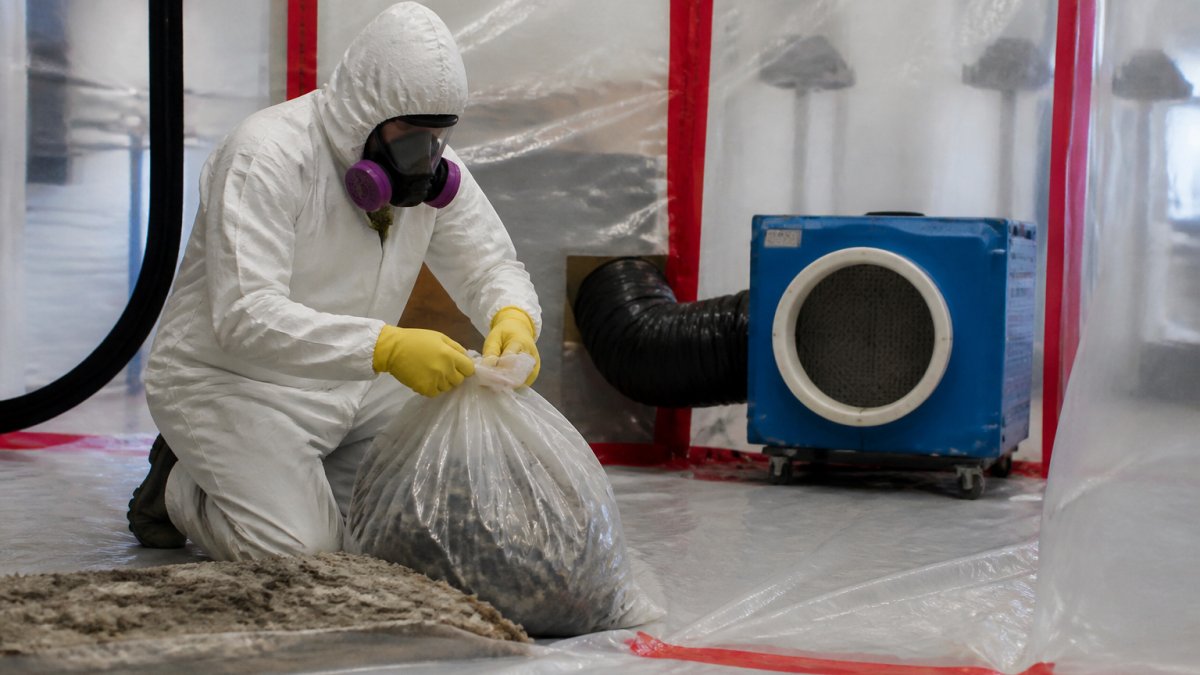
The work area must first be isolated from the rest of the building or site.
Personal protective equipment is mandatory and includes a respirator (typically a powered air-purifying respirator or PAPR for extended work), full-body protective suit, gloves, and foot coverings.
Work itself must be performed using wet methods whenever possible, misting asbestos-containing materials with water or encapsulant to suppress fiber release. Dry removal is prohibited in most cases.
Decontamination procedures are performed at the containment boundary.
Documentation of all procedures, worker names, dates, and materials removed is required. This documentation becomes part of the project record and may be requested by regulators or future property owners.
Verifying Training Provider Approval and Certificate Validity
Not all training courses meet Ontario’s standards. Only Ministry-approved training providers can deliver asbestos abatement certification courses. Before enrolling in any course, verify that the provider is actually approved and that the specific course meets regulatory requirements.
The Ministry of Labour maintains a list of approved training providers and approved courses. This list is public and can be accessed through the Ministry’s website.
Certificates issued by approved providers are valid for a defined period, typically three to five years, depending on the certification type. After expiration, workers and supervisors must complete renewal training to maintain their certification. Some employers require renewal training before the certificate expires to avoid operational gaps.
If you receive a certificate from a provider not on the Ministry’s approved list, that certificate will not be accepted as proof of compliance.
Employer Compliance Checklist and Documentation
Employers are responsible for ensuring that all workers and supervisors involved in asbestos work hold current, valid certifications from Ministry-approved providers. This responsibility extends to contractors and subcontractors, you cannot delegate compliance.
A practical compliance checklist includes the following:
- Conduct an asbestos survey before any renovation, demolition, or maintenance work that might disturb building materials. Document the results.
- Classify the work type (Type 1, Type 2, or Type 3) based on the survey findings and the scope of work planned.
- Verify that all workers and supervisors assigned to the project hold current certifications appropriate to the work type.
- Retain copies of all certificates. Digital copies are acceptable if they are legible and traceable.
- Notify the Ministry of Labour for Type 2 and Type 3 operations at least 10 days before work begins. This notification includes project details, work classification, and worker/supervisor information.
- Maintain a site log documenting the daily activities, workers present, materials removed, and any incidents or changes to the scope.
- Ensure that containment and decontamination procedures are set up correctly and followed throughout the work.
- Arrange for proper disposal of all asbestos waste through a licensed disposal facility. Obtain and retain disposal certificates.
- Upon completion, document the final condition of the work area and any post-abatement air sampling or clearance testing if required.
This documentation serves multiple purposes: it proves compliance if audited, protects the employer from liability, and provides future property owners or occupants with a clear record of what asbestos work was performed and how it was managed.
Verifying Training Provider Approval and Certificate Validity
| Verification Step | What to Check | Where to Find It |
|---|---|---|
| Provider approval | Is the training provider on the Ministry’s approved list? | Ministry of Labour website, approved provider directory |
| Course content | Does the course cover the required topics for your work type? | Course syllabus from the provider; compare to regulatory requirements |
| Certificate validity | Is the certificate current and not expired? | Certificate issue and expiration dates |
| Renewal timing | When does the certificate expire and when should renewal training be scheduled? | Certificate expiration date; plan renewal 30-60 days before expiration |
| Regulatory compliance | Does the certificate meet Ontario Regulation 278/05 requirements? | Verify the provider and course are listed in the Ministry directory |
Asbestos abatement certification requirements in Ontario exist to protect workers, building occupants, and the public from exposure to a known carcinogen. The regulatory framework is clear: different work types require different training levels, certificates must come from approved providers, and documentation must be maintained throughout the project.
At Manpower Demolition Inc, we work with certified abatement professionals on every project involving asbestos-containing materials. Our team ensures that all regulatory requirements are met, that work is performed safely, and that your property is cleared and documented properly. If you’re planning a renovation or demolition project and asbestos is a concern, we can guide you through the certification requirements and connect you with the right trained personnel to complete the work safely. Contact Manpower Demolition Inc for a consultation on your asbestos abatement project
Frequently Asked Questions
What qualification do I need to remove asbestos in Ontario?
You must complete Ministry-approved asbestos abatement worker training and hold a valid training certificate. The specific training level depends on the work type: Type 1 operations (minor disturbance) require awareness training, Type 2 (moderate disturbance) require worker training, and Type 3 (major removal) require both worker training and supervisor oversight. Supervisors must complete additional supervisor training. Certificates are typically valid for five years and require renewal through approved providers.
What safety training is required in Ontario for asbestos work?
Ontario requires three levels of training under Regulation 278/05. Asbestos awareness training covers identification and basic hazards for all workers. Asbestos abatement worker training (typically 16 hours or two days) covers safe handling, personal protective equipment, and containment procedures. Asbestos supervisor training provides additional knowledge on work planning, compliance, and worker protection. The training level required depends on the work type and occupational role.
How do Ontario asbestos requirements differ for different types of work?
Type 1 operations (minor disturbance, encapsulation, or repair) require basic awareness training. Type 2 operations (moderate disturbance, renovation, or maintenance) require full asbestos abatement worker training and certification. Type 3 operations (major removal, demolition, or structural deconstruction) require both worker training and supervisor training, with strict containment procedures and full-containment protocols. Each work type carries different hazard levels and regulatory oversight.
How can I verify that a training provider meets Ontario requirements?
Check that the provider is Ministry-approved under Ontario Regulation 278/05. Approved providers deliver accredited courses that result in recognized certificates valid across the province. Contact the Ministry of Labour or your occupational health and safety regulator to confirm provider status. Verify that course completion includes hands-on instruction, hazard awareness, personal protective equipment use, and safe work practices specific to the work type you perform.
How long is an asbestos abatement certification valid in Ontario?
Training certificates are typically valid for five years from the date of successful completion. Renewal requires retaking the approved training course before expiration. Employers must track certificate dates and ensure workers maintain current certification. Expired certificates mean the worker cannot perform asbestos abatement work until they complete refresher training through a Ministry-approved provider.
What are the main responsibilities of an asbestos abatement supervisor in Ontario?
Supervisors must ensure workers receive proper training, oversee safe work practices, implement containment procedures, manage personal protective equipment, document compliance, and coordinate with occupational health and safety representatives. They are responsible for verifying that all work meets Ontario Regulation 278/05 standards, that workers understand hazards, and that decontamination and removal procedures follow approved protocols. Supervisors must hold valid supervisor training certification.
What documentation must employers keep for asbestos abatement compliance?
Employers must maintain records of worker and supervisor training certificates, work permits, hazard assessments, containment procedures used, personal protective equipment inventory, decontamination logs, and incident reports. Documentation must show that all workers performing asbestos work held valid training certification at the time of work. Records should be available for inspection by occupational health and safety inspectors and retained for the duration of employment plus a retention period as required by provincial regulations.