


Last Updated: October 23, 2026
Quick Summary
Demolition utility disconnect coordination in Ontario requires disconnecting electricity, natural gas, water, sewer, and telecommunications services at least 10-15 business days before demolition, with written confirmation submitted to the building department before permit approval. Most municipalities won’t issue demolition permits until all utilities are verified permanently disconnected.
- Contact electricity and gas utilities 10-15 business days in advance; water, sewer, and telecom need 10 business days notice.
- Request Ontario One Call underground utility locates at least 5 business days before excavation or ground-level demolition work.
- Building departments require written confirmation from each utility showing service address, disconnection date, and technician details before permit approval.
- Start utility coordination 4-6 weeks before your planned demolition date to avoid scheduling delays with multiple providers.
- Walk the property with your contractor before demolition to visually verify all utilities are disconnected and document with photos.
Table of Contents
- Why Utility Disconnect Coordination Matters Before Demolition
- How to Disconnect Utilities Before Demolition
- Underground Utility Locates Before Demolition
- Demolition Permit Requirements and Municipal Coordination
- Demolition Utility Disconnect Checklist
- Verification and Site Readiness Sign-Off
- Common Delays and How to Prevent Them
- Frequently Asked Questions
Why Utility Disconnect Coordination Matters Before Demolition
Disconnecting utilities before demolition is a legal requirement and a critical safety step; demolition utility disconnect coordination in Ontario requires careful planning across multiple providers and municipal requirements.
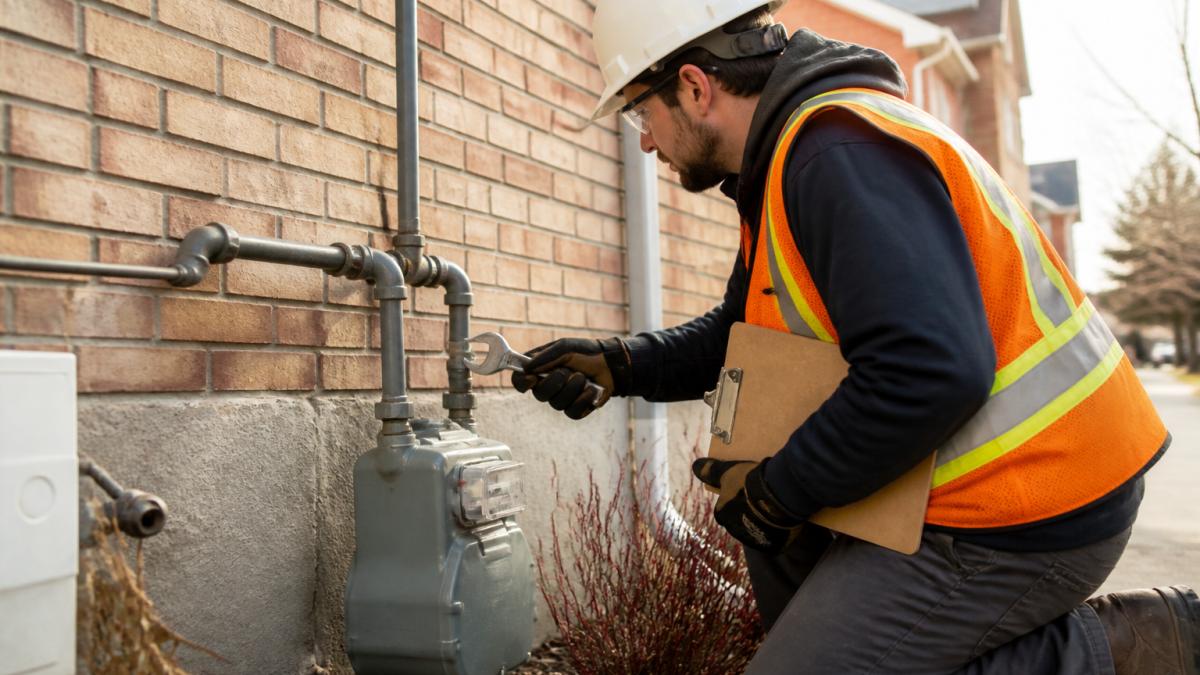
Live utilities create electrocution hazards, gas leaks, and water damage to neighbouring properties, and municipalities won’t issue final demolition permits until utilities are verified disconnected.
Coordination involves your property, the utility companies, the municipality, and your demolition contractor, each with specific responsibilities and timelines. Getting the sequence right saves weeks.
Most owners underestimate timelines: a single utility may need 10-15 business days notice, so coordinating three or four utilities requires planning before you apply for demolition permits.
How to Disconnect Utilities Before Demolition
Start early, involve each utility in writing, and document every step.
Electricity and Natural Gas Service
Contact your local electrical utility first, Hydro One or a municipal distribution company in most of Ontario, with your property address, account number, and requested disconnection date.
The utility needs at least 10-15 business days notice.
Natural gas follows the same process. Contact Enbridge or your local gas utility; a technician will locate the meter, shut off the supply, and purge the line, which is mandatory before demolition.
Request written confirmation from both utilities stating the service address, disconnection date and time, technician name and signature, and that the service is permanently disconnected.
Water and Sewer Service
Water and sewer disconnections are handled by your municipal water department or local utility.
Provide your property address, account number, and reason for disconnection.
Sewer disconnection is more complex: the municipality must locate the connection, isolate it from the main line, and cap it.
Request written confirmation including the property address, shutoff date, valve location, confirmation the line is capped, and inspector name and signature if required.
Telecommunications Lines
Telephone, internet, and cable lines must also be disconnected. Contact your provider (Bell, Rogers, or local) at least 10 business days in advance.
A technician will disconnect the line where it enters your building and remove or cap it; request written confirmation.
Some properties have multiple telecom providers. A missed provider means a live line during demolition, a hazard and a delay.
Underground Utility Locates Before Demolition
Before any excavation or demolition, request an underground utility locate, separate from service disconnection. Buried utilities include electrical, gas, water, sewer, and telecom lines.
Contact Ontario One Call at least 5 business days before you plan to start excavation or ground-level demolition work. You can request a locate online at Ontario One Call’s website or by phone. Provide your property address and describe the work you plan to do.
The locate request is valid for 30 days; if demolition is delayed beyond that, request a new one.
Underground locates are mandatory in Ontario. Striking an unmarked utility can cause injury, death, and significant liability, and halts your project while the utility investigates.
Demolition Permit Requirements and Municipal Coordination
Most Ontario building departments won’t issue a demolition permit until every service entering the building is permanently disconnected, making demolition utility disconnect coordination in Ontario a prerequisite for permit approval. Confirm what your local building department requires, order the disconnections, collect written proof, then submit the permit package with that proof attached.
What the building department typically asks for
Requirements vary by municipality, but a demolition permit package commonly includes:
- A completed demolition permit application and site plan showing the building footprint and any shared walls or party walls.
- Written confirmation of electrical disconnection from the local distribution company.
- Written confirmation of natural gas disconnection from the gas utility.
Ask the building department for its checklist in writing at the pre-application stage. A short email asking “what utility documentation do you require for a demolition permit, and at what stage?” saves far more time than discovering the answer after paying for disconnections.
The chicken-and-egg problem, and how to break it
Many owners hit the same wall: the building department wants proof of disconnection before issuing the permit, but the utility won’t schedule disconnection without a demolition date. Separate the two events in your schedule.
- Apply for the permit early and tell the building department that disconnections are in progress. Many municipalities will accept an application with a documented disconnection schedule and issue the permit once the confirmations arrive.
- Book disconnections against a target demolition date, not against permit issuance. Give each utility the date you actually intend to start work.
- Submit confirmations as they arrive rather than waiting to bundle everything at the end. A partial package with a clear cover letter showing what is outstanding is usually reviewed faster than a complete package submitted late.
What each confirmation should contain
A confirmation that just says “service disconnected” is weak evidence. Ask each provider for a record including the service address and account number, disconnection date, location (meter, property line, or street main), whether the line was capped, removed, or left in place, and the technician’s name or employee number. Keep these with the permit application, Ontario One Call locate number, and site photos, that bundle is what an inspector or utility auditor will ask for later.
Municipal variation: what to confirm locally
There is no single province-wide demolition permit form. Before applying, confirm with your local building department:
- Whether disconnection must be complete before permit issuance or only before demolition starts.
- Whether the municipality requires its own inspection of capped water and sewer lines.
- Whether a separate sewer disconnection or road-occupancy permit is needed if the connection is under a municipal right-of-way.
- Whether a pre-demolition site inspection is required and who books it.
Record the answers in your project file as a written record of what you were told and when.
Build a one-page “permit evidence sheet” for each project: utility, confirmation date, document reference, and the name of the person who confirmed it. Attach it to the front of the permit package so the reviewer does not have to hunt through the file.
Demolition Utility Disconnect Checklist
Use this demolition utility disconnect checklist to track your progress.
| Step | Action | Deadline | Status |
|---|---|---|---|
| 1 | Contact electricity utility, provide notice | 15 business days before demolition | [ ] |
| 2 | Receive written confirmation of electricity disconnection | Before permit approval | [ ] |
| 3 | Contact natural gas utility, provide notice | 15 business days before demolition | [ ] |
| 4 | Receive written confirmation of gas disconnection | Before permit approval | [ ] |
| 5 | Contact water department, provide notice | 10 business days before demolition | [ ] |
| 6 | Receive written confirmation of water disconnection | Before permit approval | [ ] |
| 7 | Contact sewer department, provide notice | 10 business days before demolition | [ ] |
| 8 | Receive written confirmation of sewer disconnection | Before permit approval | [ ] |
| 9 | Contact telecom provider, provide notice | 10 business days before demolition | [ ] |
| 10 | Receive written confirmation of telecom disconnection | Before permit approval | [ ] |
| 11 | Request Ontario One Call underground locate | 5 business days before excavation | [ ] |
| 12 | Receive locate completion confirmation | Before ground work begins | [ ] |
| 13 | Submit all confirmations with permit application | Before permit approval | [ ] |
Start utility coordination 4-6 weeks before your planned demolition date. This gives you buffer time if a utility company delays or if you need to reschedule. Most delays happen when property owners start coordination too late.
Verification and Site Readiness Sign-Off
Before your crew arrives, verify all utilities are actually disconnected. Don’t assume the work is complete just because you received confirmation.
Request a final site inspection from your municipality; some building departments require one before demolition to confirm utilities are disconnected and the site is safe.
Document everything with photos of the disconnected electrical and gas meters, capped water and sewer lines, removed telecom lines, and Ontario One Call locate marks.
Never begin demolition if you’re uncertain whether a utility is disconnected. A live electrical line, gas line, or water main can cause serious injury or property damage. Verify disconnection in writing and visually before any demolition work starts.
Common Delays and How to Prevent Them
Most demolition delays are scheduling problems, not construction problems. Utilities, the municipality, and the locate provider each run on their own clock. Build a disconnection schedule backward from your demolition date and treat each utility as a separate workstream with its own notice period and confirmation step.
A realistic scheduling framework
A workable default for a typical low-rise demolition is to start utility coordination four to six weeks before the intended demolition date. Within that window:
- Weeks 4-6 out: Confirm account numbers, identify every provider serving the property, and ask the building department for its documentation checklist.
- Weeks 3-4 out: Submit disconnection requests to electricity, gas, water, sewer, and telecom providers. Book the Ontario One Call locate for the excavation window.
- Weeks 2-3 out: Receive and file written confirmations. Submit the permit package with whatever confirmations are in hand and a cover letter listing the rest.
- Week 1 out: Walk the site, photograph disconnected meters and capped lines, and confirm the locate marks are visible.
This is a planning default, not a guarantee. Peak construction season, weather, and municipal backlogs can all stretch it.
Where the delays actually come from
Missing account and meter information. Utilities process requests against an account.
Multiple providers on one property. Properties commonly have more than one telecom provider, and less commonly more than one electricity or gas provider.
The permit-and-disconnection sequence. Building departments want proof of disconnection; utilities want a demolition date.
Site access and weather. A crew that can’t safely reach a meter or property-line valve will reschedule.
A simple delay-prevention checklist
- Build the schedule backward from the demolition date, not forward from today.
- Confirm every provider and account number before submitting requests.
- Submit all disconnection requests in the same week so the confirmations arrive together.
- File confirmations as they arrive; do not wait to bundle them.
The most reliable way to avoid delay is to treat utility disconnection as the first task in the demolition schedule, not the last task before the permit. Start four to six weeks out, submit every request in the same week, and hold the demolition start until the written confirmations and the site walk are both complete.
Frequently Asked Questions
What service lines need to be shut off prior to demolition?
All active service connections must be disconnected before demolition begins: electricity from the main service panel, natural gas at the meter or service line, water at the main shutoff valve, sewer at the municipal connection point, and telecommunications lines. Each utility provider handles their own disconnection. Verify written confirmation of each disconnection before work starts. Missing even one service line creates serious safety hazards for demolition crews and violates Ontario building codes.
How far in advance should you request utility disconnections?
Request disconnections 2-4 weeks before your planned demolition start date. Electricity and natural gas typically take 1-2 weeks to schedule; water and sewer may take longer depending on municipal workload. Submit all requests simultaneously to avoid bottlenecks. If your demolition date is firm, contact utilities immediately after securing your demolition permit. Late requests frequently delay project start dates by weeks.
Do underground utilities need to be located before demolition?
Yes. Before any ground disturbance or excavation, submit a locate request through Ontario One Call (811) at least 5 business days in advance. This identifies buried electricity, gas, telecommunications, and water lines on your property. Utility locates are free and legally required. Hitting an unmarked underground line during demolition can cause serious injury, electrocution, gas leaks, or environmental contamination. Always wait for locate marks before breaking ground.
Who is responsible for coordinating utility shutoffs on a demolition project?
The property owner is legally responsible for arranging all utility disconnections. General contractors and demolition specialists typically manage the coordination process on behalf of the owner, but the owner must authorize each request and receive disconnection confirmation. Utility providers disconnect only at the meter or service point; the contractor is responsible for verifying internal shutoffs and site safety. Clear written responsibility assignment prevents missed disconnections and project delays.
